

trauma center trauma-sensitive yoga (TCTSY)
Invitational | choice-making | Interoception | non-coercive | Shared authentic experience
What is Trauma Center Trauma Sensitive Yoga (TCTSY)
It is the first yoga-based empirically validated, clinical intervention for complex trauma or chronic, treatment-resistant post-traumatic stress disorder (PTSD).
TCTSY integrates principles of neuroscience, attachment theory, trauma theory, and hatha yoga to help participants rebuild a positive relationship with their bodies. It is widely used as an adjunctive treatment in clinical settings and has been shown to reduce trauma-related symptoms.
Unlike many public yoga classes, TCTSY does not use physical hands-on adjustments to influence a participant’s physical form. Rather, TCTSY presents opportunities for participants to be in charge of themselves based on a felt sense of their own body. Although TCTSY employs physical forms and movements, the emphasis is not on the external expression or appearance (i.e. doing it”right”), or receiving the approval of an external authority. Rather, the focus is on the internal experience of the participant. This shift in orientation, from the external to the internal, is a key attribute of TCTSY as a treatment for complex trauma and PTSD. With the approach, the power resides within the individual, not the facilitator. Further, by focusing on the felt sense of the body to inform choice-making, TCTSY allows participants to restore their connection of mind and body and cultivate a sense of agency that is often compromised as a result of trauma.
TCTSY is an adjunct therapy. It is not a replacement for traditional medical treatments, but rather a complementary approach that can enhance the effectiveness of other therapies.
Why Trauma-Sensitive Yoga is important to me
Facilitating Trauma-Sensitive Yoga is essential to me because it embodies the profound practice of holding space, not only for others but also for myself. Holding space in trauma-sensitive yoga goes beyond avoiding certain poses or using the right words—it involves creating an environment that fosters choice-making, autonomy, and agency for each participant. Through a non-coercive approach, I offer invitational language, empowering participants to explore movements and sensations in ways that feel authentic to them. Honoring interoception—the ability to tune into and interpret internal bodily sensations—is at the heart of this practice, as it encourages individuals to reconnect with themselves on their own terms.
By honoring what I feel, see, and sense within myself, I prepare to hold space with compassion and neutrality, allowing participants the freedom to navigate their journey separate from my influence. This work is not about imposing outcomes or expecting healing to occur in a certain way—it’s about supporting individuals in reclaiming a sense of agency and creating a safe environment where they can rediscover their bodies, their choices, and their authentic way. It is this transformative potential that makes trauma-sensitive yoga such an integral and meaningful part of my path.
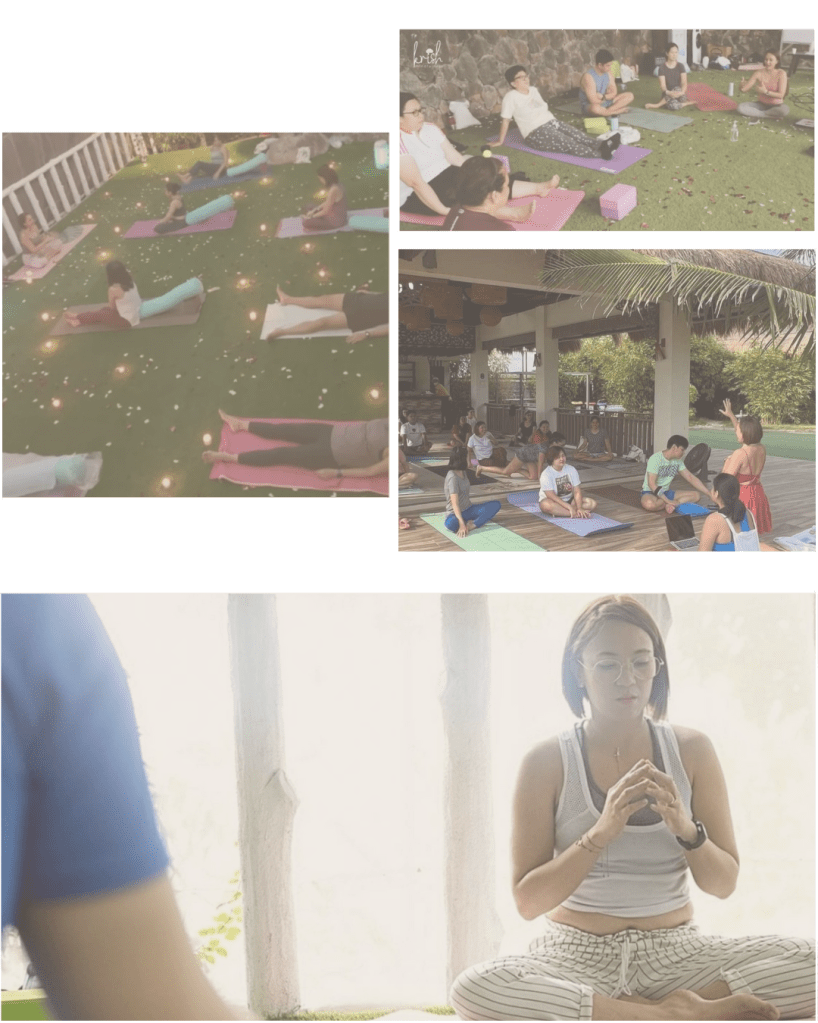
Space of practice through the lens of trauma-sensitive
Safety and Predictability: The environment is intentionally structured to feel safe and predictable, reducing potential triggers for participants. This includes clear communication, consistent routines, and a non-judgmental atmosphere.
Choice-Making and Agency: Participants are invited to make choices about their movements and engagement throughout the practice. This fosters a sense of agency and control, which is often disrupted by trauma.
Non-Coercive Approach: Use invitational language and avoid physical adjustments, ensuring participants feel in charge of their own bodies. The emphasis is on offering options rather than directives.
Interoception and Internal Experience: The practice focuses on interoception—encouraging participants to tune into their internal sensations rather than striving for external perfection. This helps rebuild a positive relationship with the body.
Empowerment Through Autonomy: My role is to support participants in exploring their own experiences without imposing expectations or outcomes. This empowers individuals to reconnect with their authentic selves.
Inclusivity and Accessibility: TCTSY is designed to be inclusive of all body types, abilities, and backgrounds, ensuring that everyone feels welcome and supported.
Compassionate Space Holding: Facilitators hold space with compassion and neutrality, allowing participants to explore their practice at their own pace, free from judgment or pressure.
Studies and Efficacy
Trauma Center Trauma-Sensitive Yoga (TCTSY) is strongly supported by research as an effective adjunctive treatment for PTSD and complex trauma. Studies have shown that TCTSY helps reduce trauma-related symptoms by fostering a sense of safety, improving interoception (awareness of internal body sensations), and rebuilding the mind-body connection. It has been particularly effective for individuals with histories of interpersonal trauma. Trauma Center Trauma-Sensitive Yoga (TCTSY) has been the subject of numerous studies highlighting its effectiveness in trauma recovery. Here is the link to the resources on research and studies. – https://www.traumasensitiveyoga.com/research.
Randomized Controlled Trials: A study published in JAMA Network Open compared TCTSY with Cognitive Processing Therapy for PTSD related to military sexual trauma. It found that TCTSY significantly reduced PTSD symptoms and improved interoception, offering a complementary approach to traditional therapies.
Feasibility Studies: Research in the European Journal of Psychotraumatology explored the role of interoception in reducing trauma-associated distress through TCTSY. The study demonstrated that TCTSY is a feasible and effective intervention for trauma survivors.
Qualitative Research: Studies published in the International Journal of Yoga Therapy examined the experiences of participants in one-on-one TCTSY sessions. Findings revealed improvements in psychological symptoms and interoception over six months, emphasizing the therapeutic benefits of TCTSY.
Moderators of Treatment Efficacy: Research in Psychological Trauma: Theory, Research, Practice, and Policy investigated how client characteristics, such as trauma history, influenced the effectiveness of TCTSY. It concluded that TCTSY is particularly beneficial for individuals with fewer adult-onset interpersonal traumas.
I would love to have a conversation with you to know more about how we can journey together.
Additional Resource
Bessel van der Kolk: Overcome Trauma With Yoga
Bessel van der Kolk, clinical psychiatrist and best-selling author of The Body Keeps the Score, shares how yoga can help you get “unstuck” from the imprints of trauma.
CFTE Co-Directors Jenn and Dave explain the TCTSY model of Trauma Sensitive Yoga
 Mindfulness with Krish